
Travel Safety Planning: How to Stay Safe During a Natural Disaster
This post may contain affiliate links, meaning I receive commissions for purchases made through those links at no cost to you. Please read my full disclosure for more information.
Lately it seems that there’s a new headline every week with a natural disaster occurring somewhere in the world. Fires, flooding, hurricanes, earthquakes and tsunamis have become an unfortunate part of our everyday lives.
As travelers, we may often have a familiar connection to the place experiencing the disaster, having lived or traveled there or thinking of someone who has. Perhaps you’ve had a near-miss or have even been caught up in one yourself.
It’s something we may not think about with the initial excitement of booking a flight and making your reservations, but a part of your essential trip planning before any vacation should always include some basic disaster preparedness.
Would you know what to do if YOU were traveling during a natural disaster? Read on for some general travel safety tips and resources regardless of your destination, plus disaster preparedness tips for visitors to Hawaii and also for US residents when traveling abroad.
Natural disasters and tourism
For me, 2023 was a year of disasters that hit too close to home.
First, on February 6th twin earthquakes with magnitudes greater than 7+ struck in the southeastern region of Turkiye and northern Syria. The area that experienced devastation was so broad that recovery efforts were slow and although everyone wanted to help, it was hard to know what we could do. Donate blood? Send winter clothing? Go there to volunteer?
From Istanbul we were a long distance away and didn’t experience the devastation firsthand but it was as if the country’s heart collectively broke that day. Those of us not in the area felt so helpless.
>> Read more about the 2023 earthquakes in Turkiye & Syria and how you can help.
Just a few months later, on August 8th, wildfires raged in my home island of Maui. Yet again I was devastated to be so far away and heartbroken for those I know who were directly impacted.
I also saw some of the same patterns that played out – people who were not on the island felt helpless and wanted to do whatever they could. But I knew that sending clothes wouldn’t be helpful (thanks to the experience with the earthquake aftermath) and so I urged my friends to send money or to contribute in other ways instead.
Yet again, it was beautiful to watch the community and volunteers come together when some would say the government failed.
>> Read more about the fires in Maui (Lahaina & Kula) and how you can help.
But one thing that really rubbed me the wrong way was an interview the local news had with a tourist who was being evacuated from Maui in the days immediately following the fires. She was complaining about her vacation being cut short, being forced to leave.
It was beyond tone deaf – more than 100 people had died in the fire and many more lost their entire homes, family members, or all of their belongings. To be privileged enough to be complaining about your holiday to people who were grieving… wow.
So to help you to NOT be a jerk… I decided to put together some easy steps you can take to prepare yourself before any trip and to give yourself peace of mind when heading to a new destination.
And should you find yourself in the midst of an unfortunate natural disaster, just know that often the best way that you can help at that point is to get yourself out as soon as it’s safely possible to do so. Just a tiny bit of disaster preparedness goes a long way so that you are not taxing resources needed for local residents.
Be compassionate with residents who have been impacted and if you’d like to continue to support the community who so graciously hosted you, try to do so with love (and financial support) from afar. Consider monthly donations to support the work of organizations who are on the ground immediately after a disaster like World Central Kitchen.
I’ve also added a section for US residents traveling abroad with a few tips I’ve noted after sharing my experience of feeling a large earthquake from Tokyo when one hit Hokkaido in December 2025.
BEFORE You Travel – Create a Travel Safety Plan
Check the weather (not just for what to pack!)
- You should always check the weather for the season in which you will be visiting. For example, Hurricane Season in Hawaii runs from June to November. Rainy conditions could lead to flash flooding so you will want to avoiding hiking and stay out of river areas that could quickly overflow.
- On the other hand, dry or hot weather in your destination and drought conditions may increase the likelihood of wildfires. You will also want to prepare with loose clothing and electrolytes to avoid dehydration. (These are my favorites, I keep them in my purse all summer!)
- Pack wisely with a few small essentials – Be sure to keep a mask with your travel first aid kit, to avoid inhaling smoke. A whistle to signal your location and a small flashlight or headlamp can often come in handy.
- Download Google Maps offline versions for your destination before leaving home and be sure you keep phones and extra battery packs charged.
Stay informed – Communication & Local Media
- Prior to your trip, be sure you also make note of the local media such as television stations, new websites and newspapers and consider following their social media accounts to be able to stay informed.
- Know the local emergency phone numbers – for example in the US you would dial 911, in much of Europe and Asia its 112.
- There are other disasters which may not be possible to predict, such as earthquakes or volcanic eruptions, but you can often register for alerts for these with government organizations.
- Besides being a way to build excitement for a trip where a foreign language is involved, it can help to know a few phrases before you go. Be sure you’ve also downloaded the language you’ll need in Google translate so that it can be used offline.
- If traveling internationally, register with the STEP program (if a US Citizen) or the equivalent from your country which will send you personalized alerts and embassy information. (But also know what the government can and can’t do in a crisis.)
- Make a copy of your important documents accessible online so that you and a trusted contact or two are able to access them in an emergency.
- Consider purchasing travel insurance and check the terms to know what is covered and how to reach them should you need to make a claim.
- World Nomads is one option – you can view their page about emergency travel assistance for details and contact info.
- Safety Wing is another I’ve used and is great for digital nomads, I like the ease of purchasing online, even from abroad.
- Have a communication plan with family and friends and any travel companions. Have someone back home who can be a central contact if needed.
- Keep a printed copy of your itinerary with you, and include contact details like your emergency contacts, nearest embassy insurance company, banks, etc.
>> One page emergency checklist info (Hawaii)
>> How I use Dropbox or Google Drive for itinerary (Template + Step by step tutorial)
DURING Your Trip – What do to when you arrive & in an emergency
When you first arrive
- Be sure to locate the exit routes from your hotel room, it helps to mentally map out alternate routes and be aware of your surroundings as you are getting to the room even if you are exhausted from a long flight!
- Choose a meeting point where you could meet travel companions in case you get separated in an emergency.
- Create a communication plan with your travel companions.
- Does everyone have access to the internet, messenger apps, and have you tested them?
- You may also want to consider eSIMs in case free wifi coverage is spotty. (Use code MALIA2345 for $3 to try out an Airalo eSIM.)
During a Fire
- Try to remain calm and proceed with your evacuation plans from your hotel to the meeting point you set up when you first arrived.
- Stay informed through local media and be sure you keep your phones charged.
- Use face masks to protect from smoke inhalation and follow all evacuation orders promptly and evacuate early – don’t wait until it is too late.
- A good resource for general fire tips is the nonprofit After the Fire.
- One of the most haunting images from the Lahaina fires was the cars trapped on front street. Here’s a good article about safely evacuating by car from the LA wildfires of 2025.
- The Watch Duty app covers most of the Western US with real-time wildfire info.
During an Earthquake or Tsunami
- Download the LastQuake app for alerts worldwide (including whether or not a tsunami was generated.)
- Drop, cover, and hold on to protect yourself during the shaking. Protect your head and neck from falling debris or furniture that could tip over.
- Move to an open area away from buildings, trees, and power lines if outside. Protect your feet from broken glass and sharp objects.
- Follow local authorities’ instructions regarding evacuation or sheltering in place.
- Check for injuries and hazards after the shaking stops.
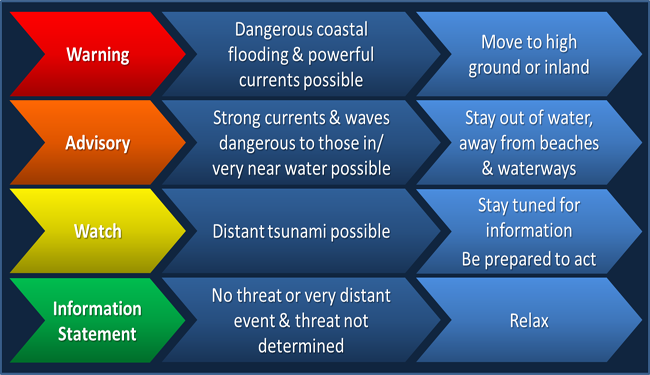
- For tsunamis in the US, you can consult Tsunami Evacuation and Inundation maps by state
- Here’s an interactive tsunami map for Hawaii and static maps by county
- Subscribe to alerts from the National Tsunami Warning Center or the Pacific Tsunami Warning Center.
- Listen to local radio and news, such as Hawaii News Now, KITV, Hawaii Public Radio
- If you are in a hotel, please follow the instructions of the staff – you will need to evacuate to the 4th floor or higher and remain there until the all clear is sounded, so consider what you need with you including medications, ID, etc.
- Use 911 ONLY for emergencies, not for gathering information. Stay off the road if you are not in an evacuation zone. Leave phone lines open and roads clear for emergency vehicles and those needing to evacuate.
- Also, keep in mind that just because YOU are safe there may still be workers who need to get home to their families or to help evacuate so there may be business closures and traffic congestion.
Getting Home
If airports and flights haven’t been affected, you may be able to change your flight free of charge. Check with your airline for help.
AFTER – how to help
- Mutual aid groups are often established in the aftermath of a natural disaster. Look to local sources who know what is needed and how to get it there fastest.
- Share accurate info – always vet information before sharing. Misinformation is a serious problem, look out for AI generated images and videos, or old footage being shared as new.
- World Central Kitchen activates its worldwide network of chefs and volunteers to respond immediately to both natural and man-made disasters. You can learn more about their organization and donate towards a specific cause, or consider extending your support with a monthly donation.
HAWAII Resources: If you are in Hawaii during a Storm (Hurricane, Tropical Storm, etc.)
In Hawaii, hurricane season runs from June to early December, but historically it peaks in July-September.
Hawaii Local Media / Social Media accounts to follow
Social media is often the fastest way to get current information. Some good accounts to follow:
- Malika Dudley – local meteorologist who maintains a broadcast channel on IG – people often send her videos and photos which she shares in real time.
- Hawaii News Now – TV station (statewide)
- Honolulu Star-Advertiser – newspaper (statewide)
- County of Maui Instagram
- MauiNow.com – Local news (Maui)
- BigIslandNow.com – Local News (Hawaii Island)
- Maui 24/7 on Facebook – follows the police scanners so they are quick to report incidents (Maui)
- MEMA Alerts – by SMS (Maui)
- Hawaii County Civil Defense (Hawaii Island)
- You can also text “HawaiiAlerts” to 888777 to opt into SMS alerts for Hawaii Island (video here)
- Hawaii red cross (Statewide) – Instagram & Facebook & Twitter/X
- Central Pacific Hurricane Center (Statewide)
Pro tip: Sometimes social media is a faster way than trying to reach your airline by phone.
USA Resources – for travelers within the US
- Ready.gov – Emergency Preparedness Tips, including a comprehensive guide on how to prepare for various disasters, including packing an emergency kit and making a plan.
- American Red Cross – Disaster Safety Information on how to prepare for different types of emergencies from a trusted organization.
- Centers for Disease Control and Prevention – Natural Disasters and Severe Weather – Guidance on health and safety before, during, and after various natural disasters.
- FEMA – Federal Emergency Management Agency – Official source for disaster response and recovery, including tips on how to stay safe and prepared.
INTERNATIONAL Resources – for Hawaii / US Residents traveling abroad
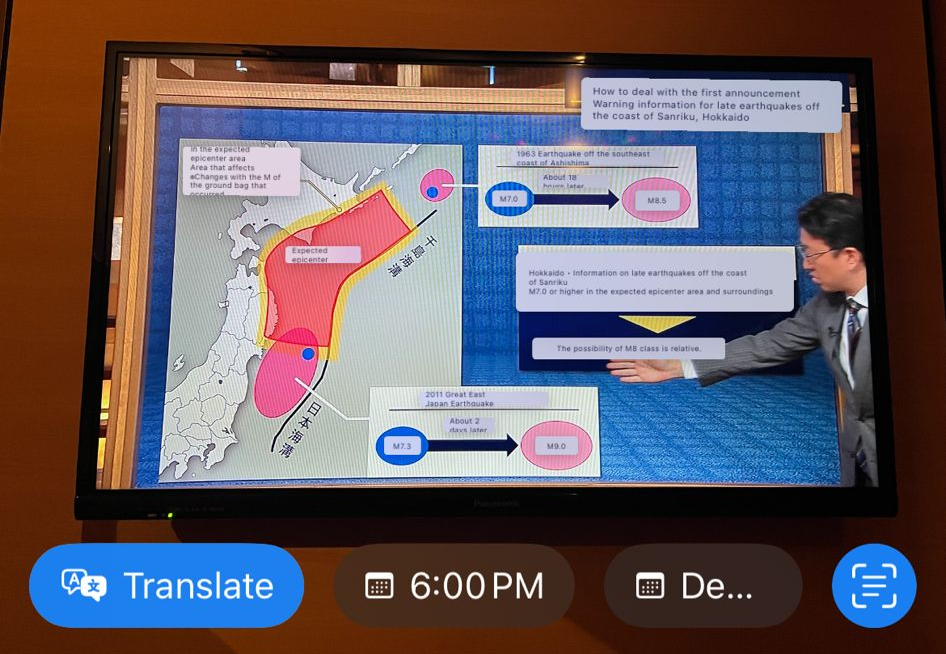
In the evening of December 8, 2025 there was a 7.6 magnitude earthquake in Hokkaido, Japan. I happened to be traveling in Tokyo at the time and it woke me from sleep when the building shook just after 11pm. Many flights were delayed and travelers affected in Hawaii, so it was on the evening news and a producer reached out to hear my experience!

In the hours that followed, I checked in on friends and students of mine from Aomori and Sapporo. In Aomori, a student’s family evacuated to safety at City Hall until the all-clear was given around 2am. This experience made me realize I should update this post with a few things you can do when traveling abroad to help stay safe and to access accurate information in the wake of a disaster, even when language barriers may get in the way.
Steps I take to stay safe when traveling internationally
- Enroll in the STEP (Smart Traveler Enrollment Program) with the US Department of State – It takes just 20 minutes to register your contact information and local hotel or accommodation so that you can be easily reached in the case of a natural disaster or emergency. Details about the dates of your trip will also enroll you in automated alerts about weather, health and security from the US Embassy in the country you will visit.
- Check your hotel room’s emergency exit plan when you check in
- Get an eSIM or be sure you will have data on your mobile device – I use Airalo in most countries to sign up for an eSIM before I leave home, which is then activated right as I’m stepping off the plane! You can use the code MALIA2345 for $3 which you can use toward your first eSIM. (I recommend getting the lowest plan and then using the easy “top up” feature once you confirm you are happy with the connection.)
- Save your the US Embassy address to a map and the phone number as a contact
- Leave a copy of your itinerary with a trusted friend or family member – I have a template of this so I just swap out the relevant information for each new trip and save a copy.
- Download offline maps & language packs – When I’ve still got a wifi connection, I always be sure to download the offline map for the areas where I’ll be staying or traveling through. Also, you can download language packs within Google Translate that will help with translating text by taking a photo or holding up your camera to see in real time.
Conclusion
These days the world is seeing more and more disasters, both natural and unfortunately man-made. Chances are you’ve probably been affected or know someone who has. My hope is is that if we all do our part by remaining empathetic and kind towards one another that help will be there when it’s needed.
Remember that your holiday destination is someone else’s home. Doing a small amount of disaster preparedness is an easy and impactful way to be a better tourist .
Staying alert and removing yourself when a natural disaster strikes is the best way to conserve resources for residents who will need to shift from focusing on taking care of visitors to taking care of their own community.
Recovery from a natural disaster is a long process, and for destinations reliant on tourism, it can be a delicate balance between taking care of the local community and encouraging visitors to return.
Safe travels, everyone!
