
Amtrak FAQs: Answers to Your First Train Trip Questions
This post may contain affiliate links, meaning I receive commissions for purchases made through those links at no cost to you. Please read my full disclosure for more information.
Planning your first Amtrak trip comes with questions you may not think to ask until you are already at the station. I’m on a mission to travel by train to all 46 states served by Amtrak, and I’ve already used the USA Rail Pass three times, traveling tens of thousands of miles and countless nights in a long-distance coach seat.
People always have questions and I love helping others to embrace the joy of train travel. I’ve been a guest on podcasts, Instagram Lives, and I’ve also written about the experience for Business Insider. You can even message me your questions via Driff!
This guide answers the questions I hear most about planning, booking, boarding, baggage, food, overnight travel, delays and life onboard, based on my personal experiences riding Amtrak over the years. It’s a living guide, so leave your own Amtrak questions in the comments and I’ll continue adding to it.
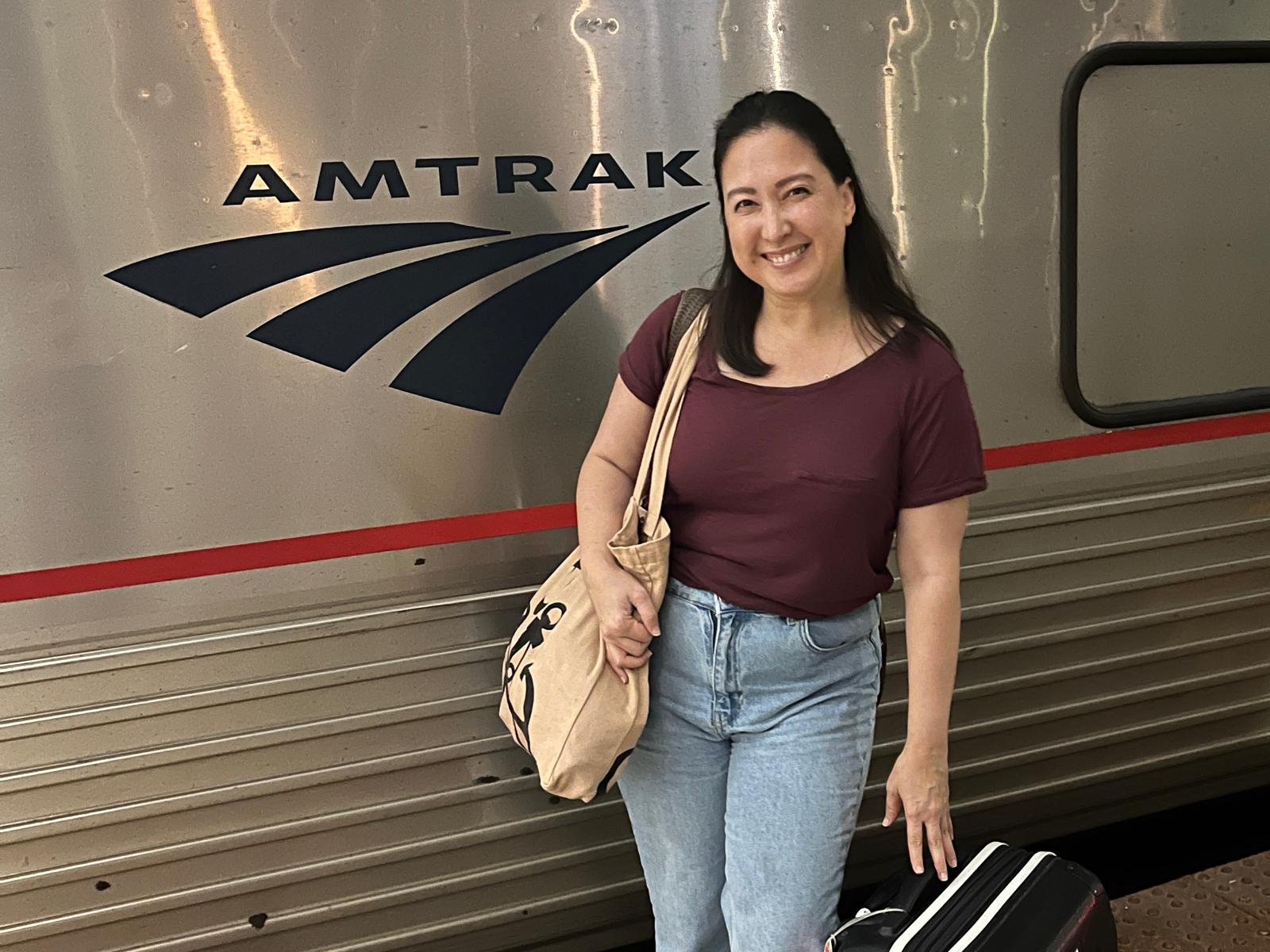
Planning and Booking an Amtrak Trip
Is taking Amtrak better than flying?
In many ways, I think it is.
You do not need to arrive hours early, search for parking, deal with a long TSA line or worry about getting stuck in a middle seat. On the train you can get up, walk around, visit the cafe and watch the scenery change outside your window.
That does not necessarily make train travel faster. Long-distance Amtrak routes can take much longer than flying, and delays are part of the experience. (Especially since in the US, cargo trains get priority over passenger trains!)
But the time onboard feels different to me. I can read, write, nap, eat, talk with other passengers or simply give yourself the luxury of being bored. The journey becomes part of the trip instead of something I have to endure before arriving. As a digital nomad, I do often work from the train as well!
Sometimes it really IS faster than flying because you go from city center to city center when you’re taking the train. So you avoid the time and expense of getting to/from the airport, waiting in long TSA lines, etc.
How do I choose the right Amtrak route?
Amtrak routes cover 46 US states (everything on the continental US besides Wyoming and South Dakota.) Start with the type of experience you want.
A short regional trip can be an easy way to travel between nearby cities without driving or to dip your toes into train travel. A long-distance route may include an overnight journey, sometimes even two, dramatic scenery and more time to settle into the rhythm of train travel.
Consider:
- How much time you have
- Whether you want to sleep onboard
- The scenery along the route
- Where you might stop for a night or two
- Whether you want a direct journey or several connections
- What time the most scenic sections are likely to occur
I have a growing guide to my favorite Amtrak routes, along with individual reviews such as my fist ever long distance train experience, taking the Coast Starlight southbound.
For a first long-distance trip, I recommend choosing a route where the journey itself excites you, not simply the cheapest way to reach the destination.
How do I book an Amtrak ticket?
Search for routes and buy tickets through the Amtrak website or app.
Your ticket includes a QR code along with your train number, departure time and destination. Keep it easily accessible and make sure your phone is charged. You can bring a printed copy if it makes you feel better, but showing the QR code on your phone is enough.
Unlike flying, there is not usually a separate check-in process. On many routes, you will board before your ticket is scanned. Once the train starts moving, a conductor will come through the car and scan everyone’s tickets.
On a very long journey, your ticket may be scanned again after a crew change.
How far in advance should I book?
It depends on the route, season and type of accommodation but in general you want to book as far in advance as you can for the best prices.
Popular trains, holiday periods and private rooms can sell out, so booking early gives you more choices. Coach seats may be available closer to departure, but I would not depend on last-minute availability for an important trip.
I also avoid building an itinerary around the tightest possible connections or nonrefundable bookings, so consider having a buffer day (or two) in between long distance routes and paying a little more for the “Flex” ticket which allows you to change or cancel your ticket if needed.
What is the difference between coach, business class and a sleeper?
All of my experience is in coach, with the exception of a few shorter trips when Business Class wasn’t significantly more expensive.
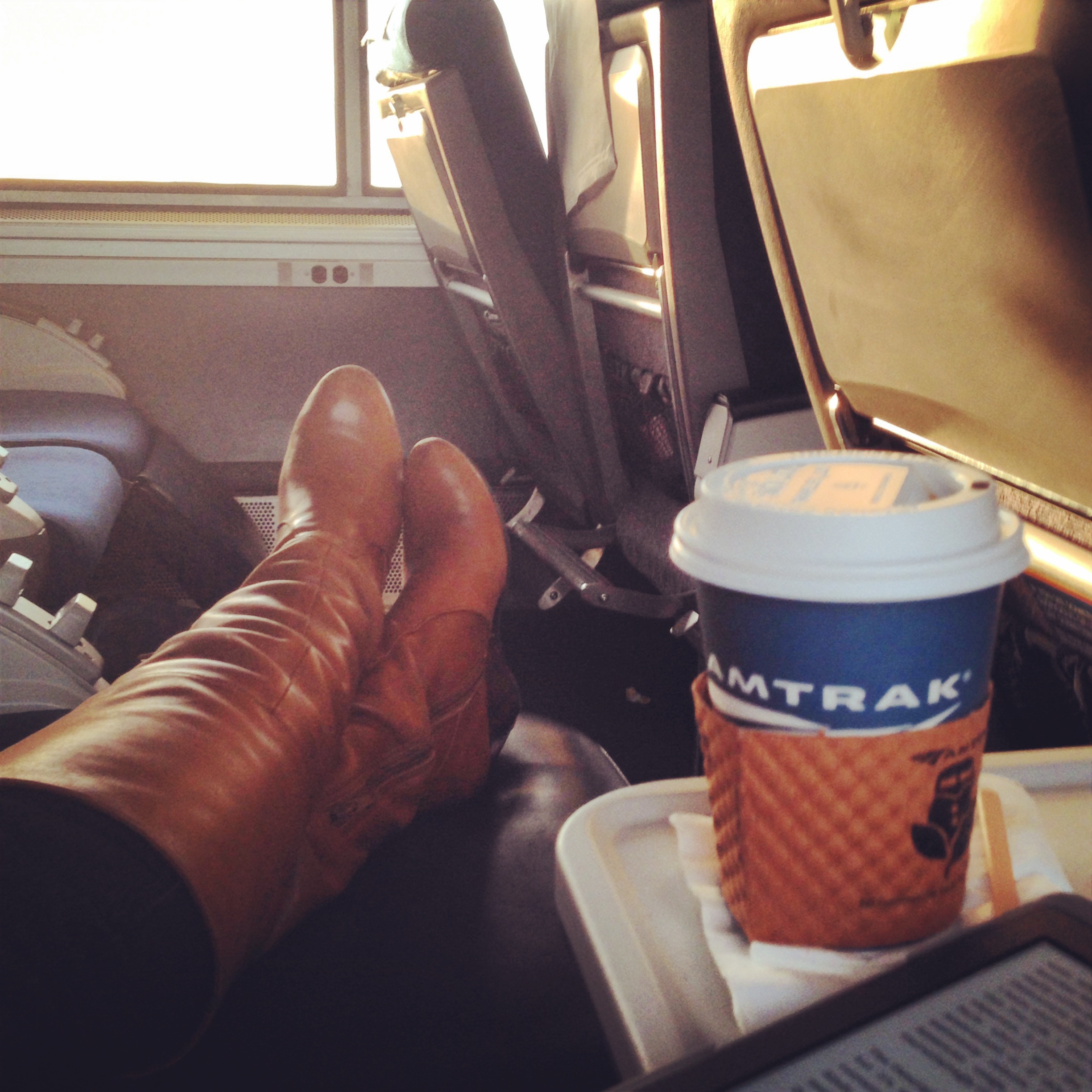
Coach has wide, reclining seats with generous legroom and on long-distance routes there’s also usually a leg rest that comes up in addition to foot rests. There are no middle seats on Amtrak, its always a 2-2 configuration. There’s an outlet for charging your devices between or next to the seats.
Business-class amenities vary by route. Depending on the train, they may include benefits such as a different seating area, complimentary nonalcoholic drinks or priority boarding. I have only used business class once, on Acela, so I would check the specific train before deciding whether the price difference is worthwhile. Sometimes it does come with a 25% mileage boost, so that was why I took it when the price wasn’t much more than coach.
Roomettes and bedrooms are private sleeping accommodations available on certain long-distance routes. They provide seats during the day and bed berths at night with more privacy, and all of your meals (in the dining car when available, or “flex dining” on some routes) are generally included. I have not personally slept in one, so this guide focuses on coach.
What should I consider when planning a short trip versus a long-distance journey?
For a short trip, you may only need a snack, water bottle and something to read.
A long-distance or overnight journey requires more planning. Some routes have schedules that will be more scenic in one direction than the other. Here’s a link to discussion thread and a map to give you a sense of day-night routes, but take it with a grain of salt as it’s not up to date – for example there is no connection between New Orleans and Florida after Hurricane Katrina!
Your mindset is also different. On a short ride, the train may simply be transportation. On a long-distance route, the journey becomes a significant part of the experience.
What is the Amtrak USA Rail Pass?
The USA Rail Pass allows you to reserve 10 travel segments to use during a 30-day travel period for a set price of $499. (Pro tip: it generally goes on sale in January for around $299, but in 2026 it was only $250!)
A segment is one ride on a train or eligible connecting bus. A direct journey from Los Angeles to Chicago counts as one segment, but a trip requiring you to change trains at a connection to bus or another train uses two segments.
The pass is only valid for coach travel. It can be especially valuable when you use several segments for long-distance routes, although the right itinerary will depend on your own plans. I always aim to use all 10, but often run out of time when I’m stopping to visit friends or family. But even using 2-3 segments can make up for the cost of the pass!
I have now bought the pass three times while working toward my goal of reaching all 46 Amtrak-served states. You can buy the USA Rail Pass and check its current rules on Amtrak’s website.
I have also written about what I wish I had known before using the USA Rail Pass for Business Insider.
I’m working on a separate guide with the routes from each of my passes, maps, mileage, seasons, highlights and what I would do differently.

Arriving at the Station and Boarding
How early should I arrive for an Amtrak train?
For most trips, I aim to arrive at least 30 minutes before departure.
I often arrive closer to an hour early for a long-distance route because I like having time to find the boarding area, look around the station, buy coffee and pick up last-minute snacks without feeling rushed.
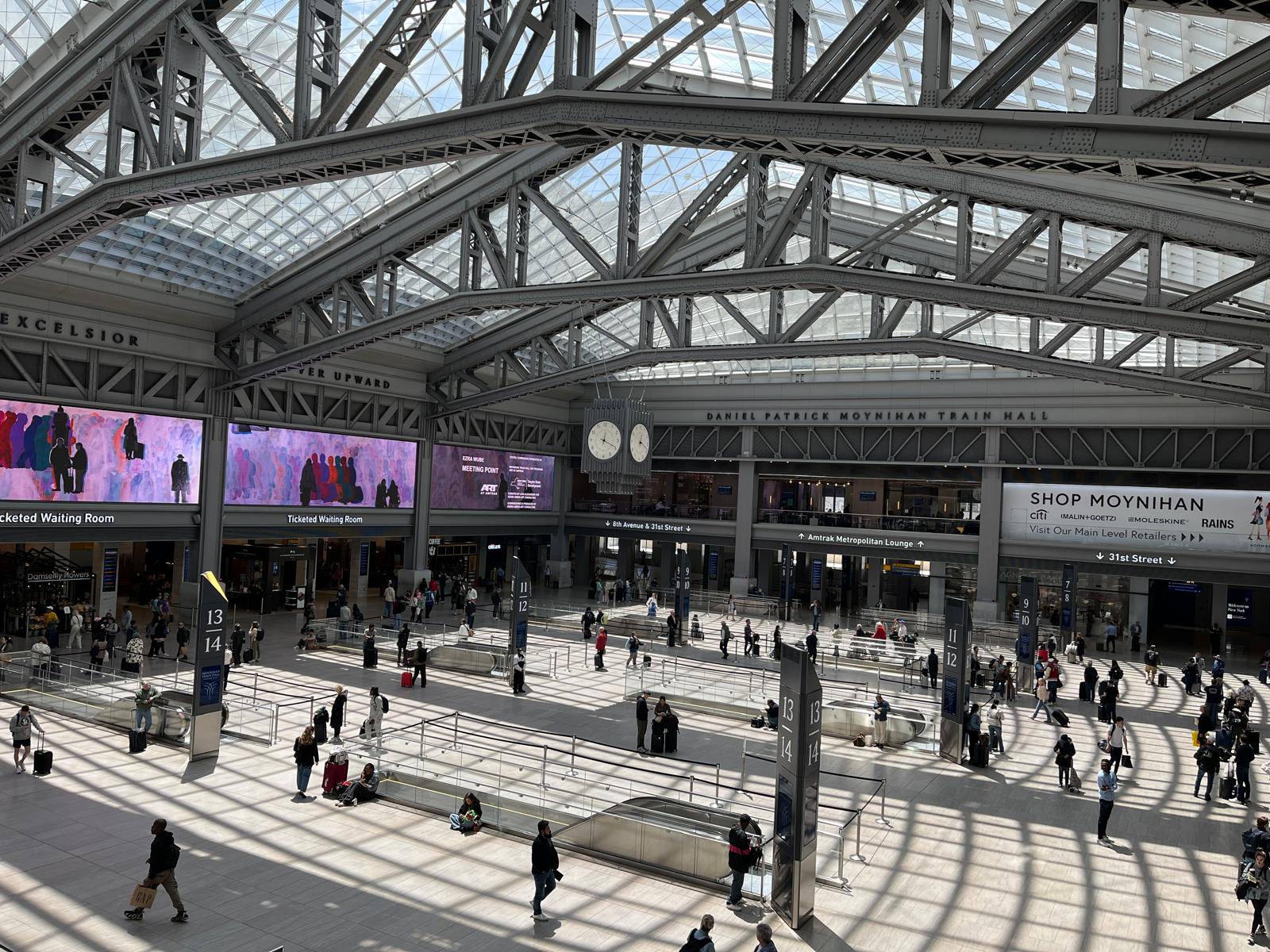
However, the experience varies by station. At a large station such as Chicago Union Station, you may wait in the Great Hall and then line up in a designated area before being directed to the platform. Most times seats are either not assigned or sometimes given out trainside, but for example at Los Angeles Union Station when catching the Coast Starlight, you can line up to get a boarding assignment. When in doubt, ask station staff or fellow passengers.
At a small station, the process may be as simple as waiting beside the track.
Give yourself additional time if you are checking luggage (if offered at your station, not all stations accept checked bags), if you think you’ll need extra assistance or have never visited that station before.
Similar to an airport, there’s a departures board which will show the track or gate for your train as it gets closer to boarding time.
Do I need to check in or go through security?
There is not usually a flight-style check-in or TSA screening process.
You should have your ticket handy on your phone, but it will usually not be scanned until after the train departs.
Some stations have controlled boarding areas or staff who check that you are ticketed before allowing you onto the platform. The exact process depends on the station, but it is generally much simpler than navigating an airport.
What is the Amtrak boarding process like?
At larger stations, a gate or track may be announced shortly before departure. Passengers may line up and then be directed to the platform.
Once you reach the train, pay attention to the signs on the cars and listen to the staff. Coach, business-class and sleeper passengers may board in different sections.
An attendant on the platform may ask for your destination before you board. Passengers are sometimes grouped based on where they are getting off, particularly on long-distance and overnight routes.
Tell the attendant your destination, and they will tell you whether to board there or continue farther down the platform.
How does priority boarding work?
Priority boarding varies by station, train and ticket type.
Business-class and sleeper passengers may have a separate boarding process at some stations. Passengers who need extra time or assistance may also be able to board early by taking advantage of Red Cap service if available.
Do not worry if other groups are called before yours. Listen for coach boarding or ask a staff member if you are unsure where to wait.
What is Red Cap service?
Red Caps are Amtrak employees who provide baggage and mobility assistance at certain major stations. They can help passengers navigate the station, transport luggage and, in some cases, board before the main crowd.
I used Red Cap service when I was traveling with a particularly large bag after moving. It gave me more time to get myself and my luggage onboard without feeling rushed. Normally I pack light so that I don’t need it.
The service is especially useful for passengers with disabilities, older travelers, families, groups or anyone who needs help with their bags. Amtrak describes Red Cap assistance as free, although passengers may choose to tip. You can see the current Red Cap and station baggage information here.
Coach Seating and Luggage
Are seats assigned on Amtrak?
Sometimes. (Frustrating, I know!)
On many long-distance trains, you choose an available coach seat after boarding. On others, an attendant may assign you a seat at the station, on the platform or as you enter the train.
At Los Angeles Union Station, for example, I have received a seat assignment before boarding the Coast Starlight. If seats are being assigned, you can politely ask for a window, aisle or particular side of the train. There is no guarantee, but it does not hurt to ask.
After your ticket is scanned, the conductor may place a small paper seat check above you. This tells the crew where you are getting off, which is particularly useful during overnight travel during “quiet hours” when there are no announcements!
If you want to change seats, ask a conductor first. They may know that a family, couple or group will be boarding at an upcoming station.
What are Amtrak coach seats like?
Amtrak coach seats are much more spacious than typical airplane seats.
There are no middle seats on Amtrak trains. (Yay!) Coach is generally arranged with two seats on each side of the aisle, so you will have either a window or an aisle seat.
The seats are wide, recline deeply and provide generous legroom. There is usually a footrest as well as a padded leg rest underneath the seat that can be raised. (Many first-time passengers do not realize that the leg rest is there. With the seat reclined and both rests raised, it can feel a little like sitting in a recliner.)
Should I choose a window or aisle seat?
Choose a window seat if your priorities are scenery, control of the curtain for shade and having something to lean against while sleeping.
Choose an aisle seat if you want to get up frequently without asking your neighbor to move. (Though there’s much more legroom so it’s not THAT hard to step over to the aisle from the window.)
One consideration is the electrical outlet, which is often located beside the window seat. Some aisle passengers bring an extension cord like this one so they do not need to keep reaching past the person beside them. (Or just bring a power bank.) There are also plenty of outlets in the Sightseer Lounge, if you are in a Superliner.
How do I know which side of the train has the best views?
Research the specific route and direction before your trip.
Search for the train name along with northbound, southbound, eastbound or westbound. Amtrak communities, blogs, videos and discussion forums may provide route-specific advice.
I also create a Google Maps list for each train. I save every station and add landmarks, scenic stretches and anything else I want to watch for.

That helps me understand where we are and what may be coming up next. I also ask other passengers, especially regular riders who know the route well.
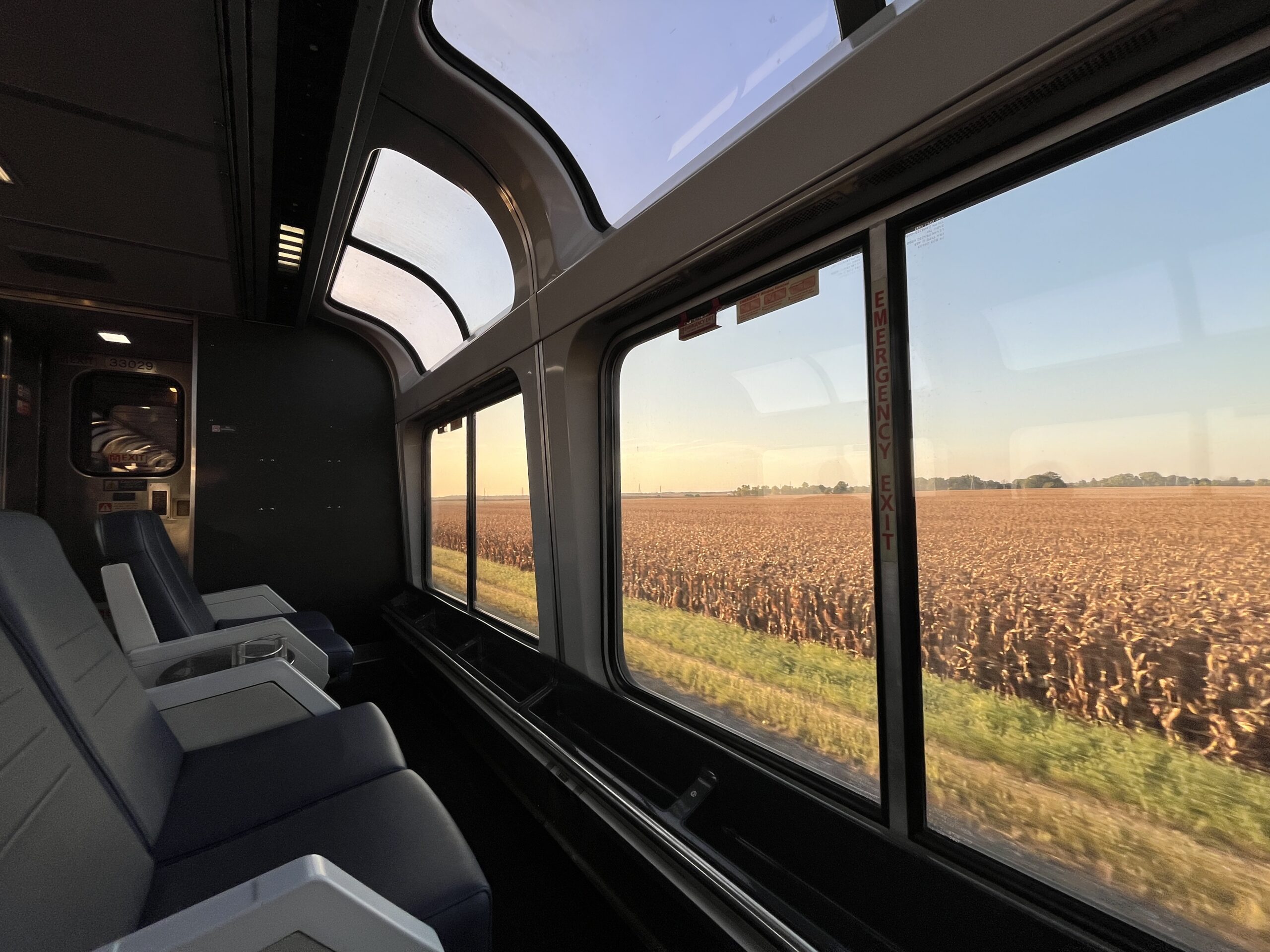
The best views may switch sides during the journey, which is one reason the Sightseer Lounge is so useful.
How much baggage can I bring?
Amtrak’s allowance is generally more generous than an airline’s, but the exact quantity, dimensions and checked-bag availability can change.
Not every train or station offers checked baggage service, so check your complete itinerary before relying on it.
Rather than reproducing measurements that may eventually change, I recommend reviewing Amtrak’s current baggage policy before packing. As of July 2026, you can bring a personal item up to 25 lbs and two carry on bags up to 50 lbs (plus checked bags, if both your origin and destination station offer checked baggage service.)
Even when your luggage is technically allowed, do yourself a favor and bring only what you can manage yourself. You may need to carry it through a busy station, lift it onto a rack or maneuver it up a narrow staircase.

Where do I put my luggage onboard?
On bi-level Superliner trains, there is generally a luggage area downstairs near the entrance, before heading upstairs to your seating area. I often leave a larger suitcase there if I have one. The staircase to the upper level of a Superliner is narrow and angled. Carrying a large, heavy suitcase upstairs can be awkward, which is one reason I often prefer a backpack.
Before arriving at my destination, I sometimes move one bag downstairs a stop early so I am not trying to manage everything at once when it is time to get off.
There are also overhead luggage racks above the coach seats, so if you want to keep your eyes on your luggage, that may be a better option.
Is my luggage safe when I leave my seat?
I have never had anything stolen on Amtrak, but I still use common sense.
My phone, wallet, computer and anything else I could not afford to lose stay in a crossbody bag that comes with me to the bathroom, cafe and Sightseer Lounge.
At night, I sometimes wrap that bag in a sweater or blanket and use it as part of my pillow setup.
You can use luggage locks or a small cable to connect bags if that makes you more comfortable. I would not leave irreplaceable valuables inside a large unattended suitcase.
Food, Bathrooms and Overnight Travel
Can I bring my own food and drinks?
Yes, and I strongly recommend bringing food for a long-distance journey.
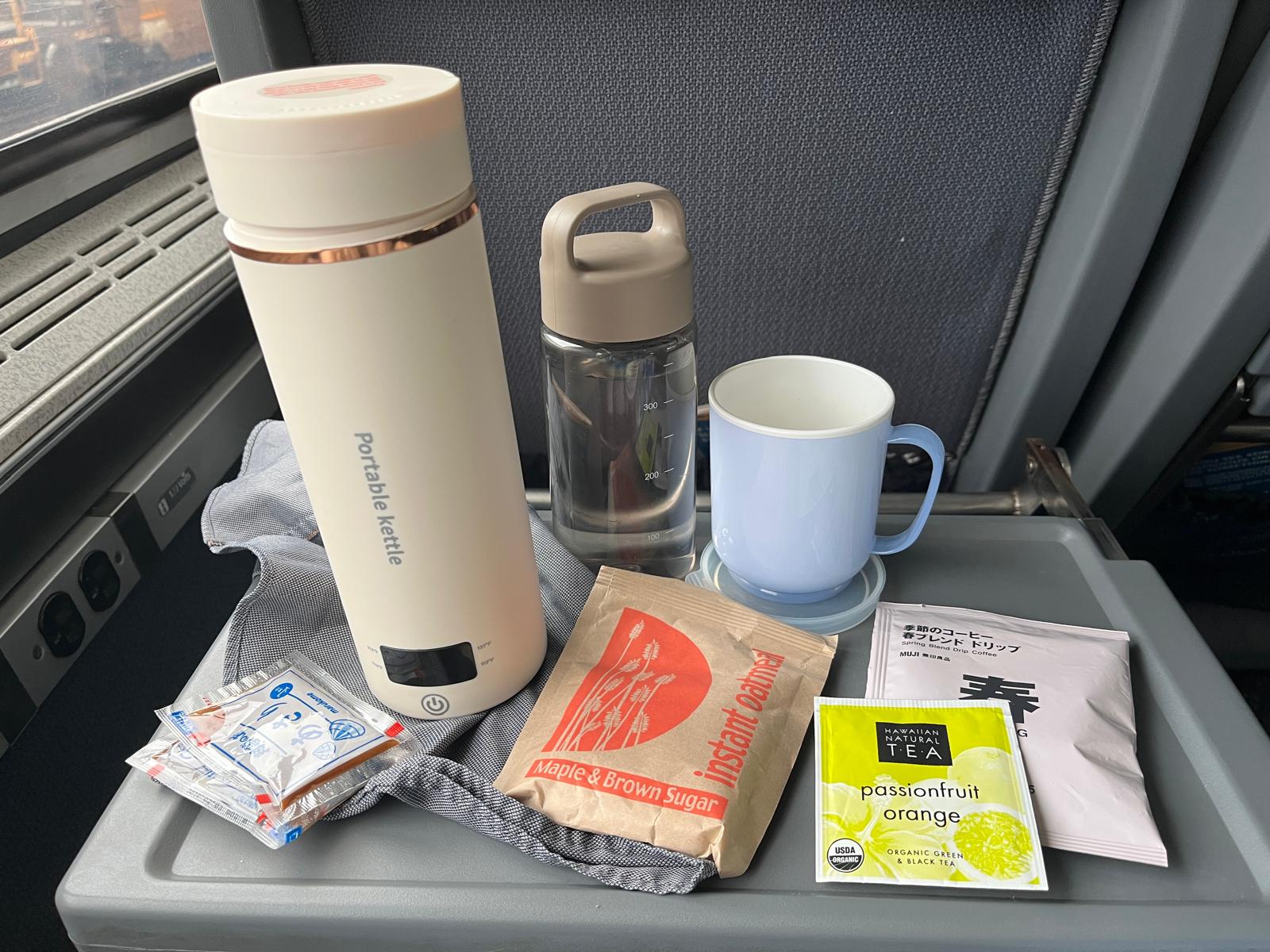
I usually bring a combination of snacks, a fresh meal to eat early and foods that can be prepared with hot water.
Some of my favorites include:
- Nuts and dried fruit
- Chocolate or peanut butter cups
- Granola or protein bars
- Sandwiches
- Fruit and cheese
- Instant oatmeal
- Instant miso soup
- Cup noodles
- Regional takeout from the place I am leaving
I have boarded trains with a muffuletta from New Orleans, tomato pie from Philadelphia and food-cart takeout from Portland.
Always keep a few emergency snacks in reserve in case the cafe is closed, sold out or farther away than you feel like walking.
Amtrak allows passengers to bring personal food and nonalcoholic drinks for consumption at their seats. Staff cannot heat or refrigerate your food. You can check Amtrak’s current personal food and beverage policy here.
What food can I buy onboard?
Many long-distance trains have a cafe selling coffee, drinks, snacks and simple meals.
The offerings vary, but I generally treat the cafe as a supplement to the food I bring rather than my entire meal plan. I may buy coffee, a breakfast sandwich, a salad, a cold drink or something warm when I want a change from my snacks.
Do not expect gourmet dining from the cafe. It is primarily there for convenience.
One thing I always check is if there might be a regional craft beer or wine, once in a while there are some good ones! For example, I was pleased to see Dogfishhead’s 90 Minute IPA on a recent train from DC to Richmond, VA.
Can coach passengers eat in the dining car?
Sometimes.
On certain long-distance routes, coach passengers may be able to purchase a dining reservation after sleeper passengers have been accommodated. Availability varies, so listen for announcements or ask a staff member.
One thing to note: dining tables are communal. If you are traveling alone or in a party of two or three, other passengers will be seated with you.
That can be part of the fun. Train dining is one of the few experiences where strangers are routinely seated together and encouraged to have a conversation.
Dinner is three courses and includes an appetizer, dessert and beverage for $45. Everyone speaks so highly about the steak and it looked really tempting when I’ve seen it in photos, but this was a bit disappointing, sadly.

Can I bring alcohol?
Alcohol is sold on many trains.
Coach passengers must purchase alcoholic beverages onboard rather than consuming their own alcohol in public areas. Amtrak permits personal alcohol only under specific rules for private sleeping accommodations.
Because these policies matter, check the official food, drink and alcohol guidance in the onboard dining section before your trip.
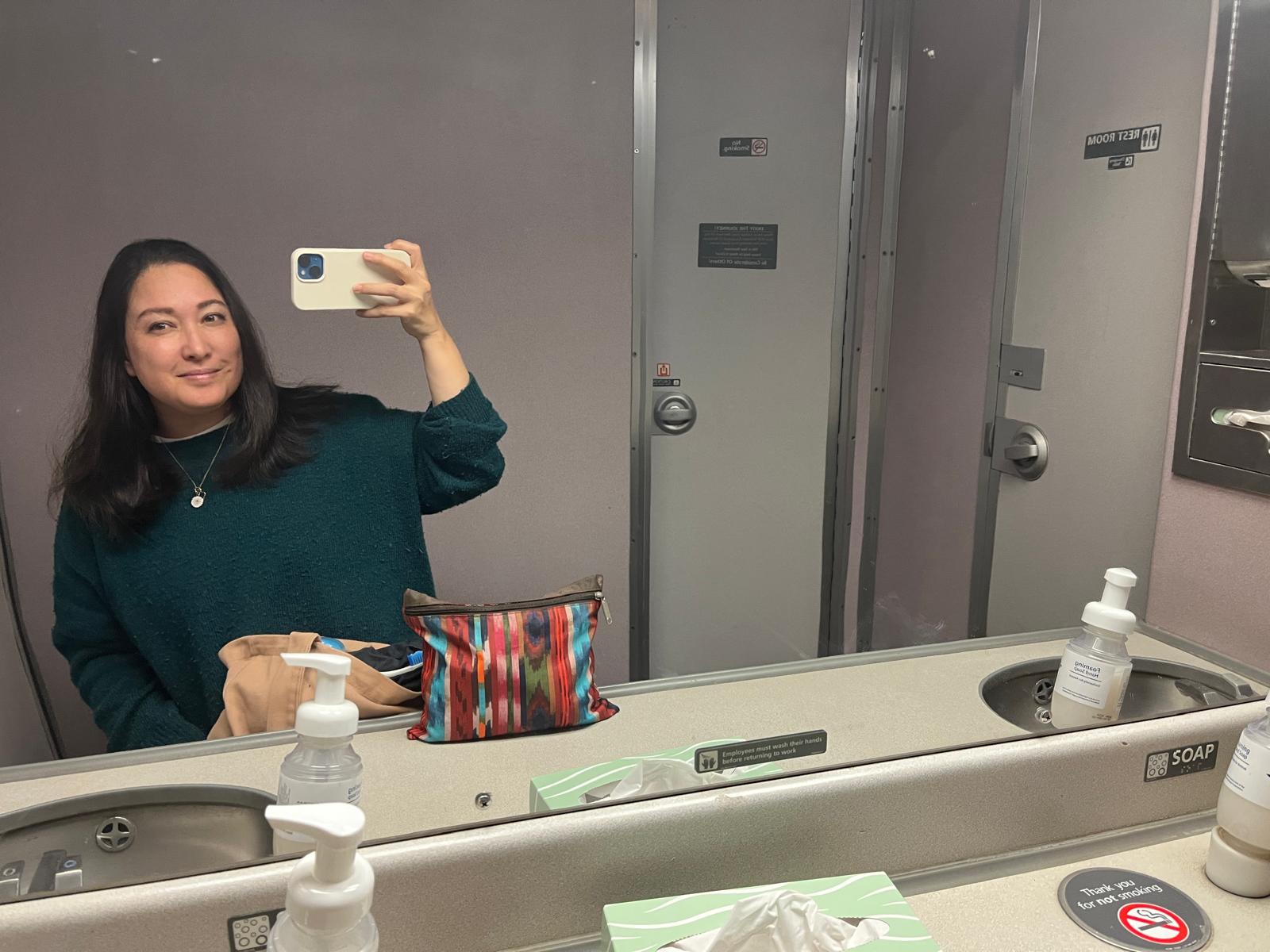
What are the bathrooms like?
I am not going to lie, the bathrooms are not the most pleasant part of the experience.
Think of an airplane bathroom, although the size and layout can vary. Plus, extra turbulence thanks to the rocking of the train.
On some Superliner coach cars, several bathrooms are downstairs. Some are small, while another may offer more space for changing so peek into one or two to find the cleanest if needed and bring your own sanitizing wipes.
I have also encountered a larger washroom area with multiple sinks!
I approach overnight train travel a little like camping. I use the bathroom for the basics and baby wipes, a fresh swipe of deodorant and a change of shirt and underwear can go a long way to staying fresh, similar to a long travel day when you’re flying.
Another reason I always book one (preferably two) nights of hotel at the end of an overnight train stretch is knowing that a full shower and a bed where I can stretch out is waiting at my destination.
Are there showers?
Coach passengers do not have access to showers.
Private sleeping accommodations may have access to shower facilities, depending on the train and room type.
In coach, I plan around not showering until I reach my next hotel, friend’s home or other overnight stop. I generally avoid spending more than two consecutive nights onboard, and often schedule a break after one.
I’ve heard that there are bathrooms in the Lounge at some stations, like Chicago Union Station. Lounge access can be purchased to give you access 3 hours before your next train, on a space available basis. It might be worth it if you really want the shower!
Can you sleep overnight in an Amtrak coach seat?
Yes, although I obviously do not expect a perfect night of uninterrupted sleep.
The seat is wide and reclines much farther than an airplane seat. I raise the footrest and leg rest, then I use an eye mask, headphones or earplugs, a blanket and a small pillow.
If the seat beside me remains empty and the conductor confirms that it is not needed, I may raise both leg rests and curl up across the two seats.
I often sleep for a few hours at night, wake up early and find a spot in the Sightseer Lounge to have coffee from the cafe car when it opens (usually around 6 or 6:30am) and then take a daytime nap or two when the scenery is less interesting.
Even when I do not sleep perfectly, I usually arrive feeling so much less stressed than I would after flying!
Tips for staying fresh on a multi-day journey?
I keep a small toiletry bag near my seat with:
- Toothbrush and toothpaste
- Deodorant
- Wet wipes
- Hand sanitizer
- Fresh underwear
- Fresh socks
- A clean T-shirt
A quick wipe-down, brushed teeth, deodorant and clean clothes can make you feel surprisingly refreshed!
Note: Do not flush wipes, even if the package calls them flushable. Train toilets can be sensitive.
Life Onboard the Train
What is the Sightseer Lounge?
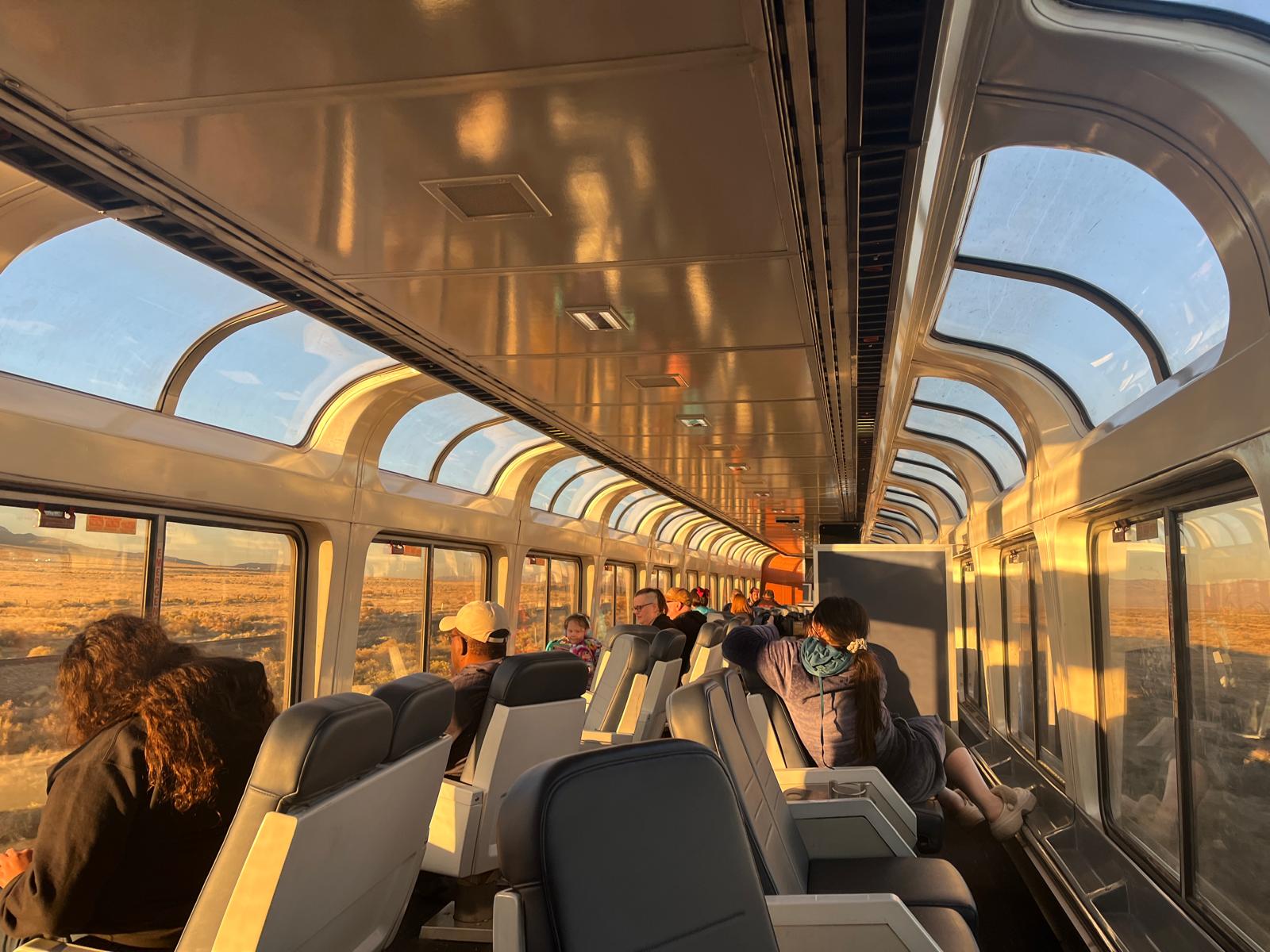
The Sightseer Lounge is my favorite place on any long-distance train that has one.
It is found on certain bi-level Superliner routes and has large windows that allow you to see the landscape on both sides.
One section generally has booths with tables where passengers can eat, work or play cards. Other seats face the windows. The cafe is usually located downstairs in the same car.
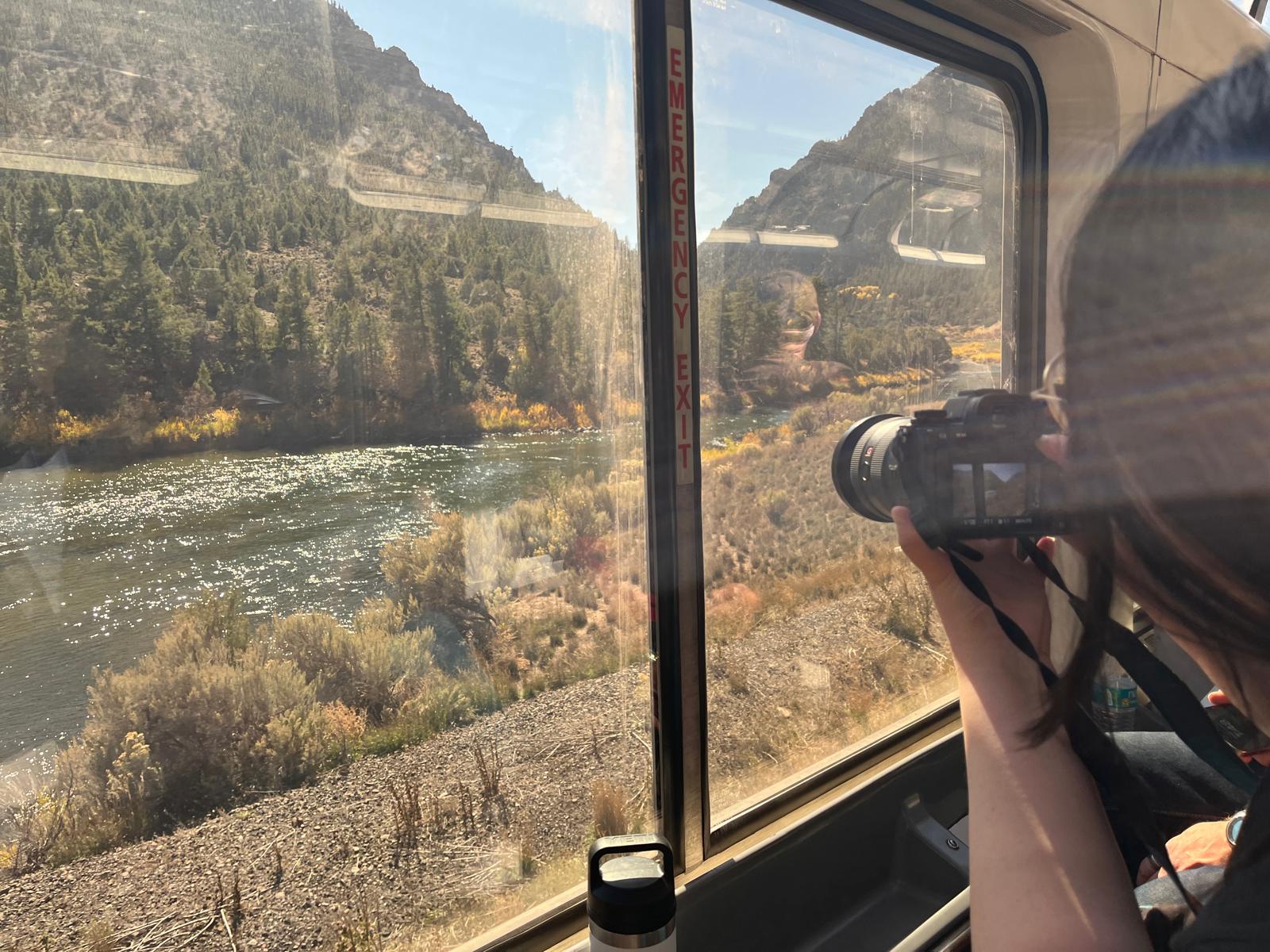
Some of my favorite train memories include drinking coffee while looking at snow-covered Mount Hood, eating oatmeal as the train left Denver and watching golden sunsets over fields and desert landscapes.
Can I stay in the Sightseer Lounge all day?
It is a shared space, so pay attention to how long you have been sitting there.
During popular scenic stretches, seats can be in high demand. On one California Zephyr trip, the conductors announced a two-hour limit so everyone could have a turn.
I use the lounge when I am enjoying the scenery or feeling social. If I want to sleep, concentrate on work or stop looking outside, I return to my coach seat and leave the space for someone else.
Do Amtrak trains have Wi-Fi and outlets?
Many trains have electrical outlets, although their number and position vary.
Wi-Fi is less dependable. Even when it is offered, it may be slow or disappear during remote stretches. Cell service can also be unavailable for long periods.
Download anything important before boarding, including entertainment, maps, tickets, hotel details and work documents.
Amtrak describes its Wi-Fi as basic service intended for general browsing rather than high-bandwidth streaming or large downloads. You can check which trains currently offer Wi-Fi here.
What are the quiet hours and Quiet Cars?
Some corridor and shorter-distance trains have a designated Quiet Car where passengers are expected to limit conversation, avoid phone calls and use headphones.
You can review the current Amtrak Quiet Car guidance here.
Long-distance overnight trains also become quieter at night. Lights are lowered and announcements may be limited, so keep conversations and devices quiet.
This is also why the paper seat check above your seat matters. It helps the conductor know who needs to be awakened for a late-night stop.
What is the etiquette for talking and using devices?
People can be chattier on trains than on airplanes, and that can be a wonderful part of the experience.
I have had memorable conversations and even once met a distant relative while traveling through rural Wisconsin.
But you are never obligated to socialize. Over-the-ear headphones can signal that you want quiet, or you can politely say that you need to work, read or rest.
Use headphones for music, calls and videos. Keep the seat beside you clear when the train is busy, even if it appears empty when you first board. More passengers may be joining at the next station.
The Sightseer Lounge is also shared. Be aware of the passengers waiting for seats, especially during scenic sections.
Is Amtrak safe for solo travelers?
I have generally felt safe traveling alone on Amtrak.
As with any form of transportation, pay attention to your surroundings, keep your valuables with you and listen to your instincts.
As a frequent solo female traveler, I do carry a personal safety alarm and a whistle, although I have never needed to use either.
Train staff regularly pass through the cars, and passengers often become familiar with the people sitting around them. Making conversation when it feels comfortable can also create a small sense of community onboard.
How do you pass the time on a long train journey?
A long train ride is a rare opportunity to unplug.
You might:
- Read
- Write postcards
- Journal
- Sketch
- Take photographs
- Knit or crochet
- Play cards
- Complete puzzles
- Work on an offline project
- Listen to downloaded music or podcasts
- Talk with other passengers
- Look out the window and do absolutely nothing
Some of my most productive writing sessions have happened on trains precisely because the Wi-Fi was not working.
I also use a sensory snapshot exercise. I pause and notice what I can see, hear, smell, touch and taste in that moment.
It helps me stop scrolling, become more present and remember the journey more clearly.
Stops, Delays and Connections
Can I get off the train during a stop?
Do not get off at an ordinary station stop.
Most stops are very short and are only intended for passengers to board or leave the train.
Staff will announce designated fresh-air stops. Ask how much time you have, stay close beside the train and get back onboard immediately when “all aboard” is called.
The train can leave without you.
During longer fresh-air stops, I walk beside the train to stretch my legs. I also wear compression socks on long journeys and try to get up and move regularly.
How can I track my train?
You can monitor your trip through the Amtrak app or website.
Amtrak also has an interactive Track a Train map showing train locations and status information.
Continue checking for updates. A train that is running late may make up time, and station stops can sometimes be shortened.
Do not assume that a one-hour delay means you can arrive at the station one hour later. Unless Amtrak tells you otherwise, be there based on the original departure time.
What should I expect when an Amtrak train is delayed?
Delays are part of long-distance train travel.
Avoid scheduling tight connections, nonrefundable plans or important events immediately after your expected arrival.
For a wedding, flight or other time-sensitive commitment, I would build in at least a full day of buffer.
I also keep detailed records when something goes wrong. I take screenshots, save emails and receipts, record timestamps and note who I spoke with. Call 1800-USA-Rail (even from the train) to open up a case with Customer Relations, especially if you will be requesting compensation.
Most importantly, do not take your frustration out on onboard staff. They are arriving late too, while managing an entire train of tired passengers. Be kind and stay positive. Being flexible and making the most of things is really one of the most underrated skills I’ve learned from slow travel.
What happens if I miss a connection?
Whenever possible, book connecting Amtrak trains together. Doing so ensures that Amtrak will already be working on rebooking you onto the next train.
I once arrived in Chicago about eight hours late along with a train full of passengers who had missed their connections. Amtrak organized buses to hotels and transportation back to the station the following day, plus vouchers to get lunch at the station.
It was not ideal, but the staff handled a difficult situation efficiently. (My hotel was all the way out in Hammond, Indiana but those who were luckier got placed in a hotel in Chicago’s Chinatown, they boarded the next stay raving about the “bonus” vacation day they got out of the delay.)
If you experience a disruption, speak with station staff or call 1-800-USA-RAIL for help with rebooking and next steps.
How much buffer time should I build into my itinerary?
The longer the route and the more important the next part of your trip, the more flexibility I would build in.
Avoid planning an event immediately after the scheduled arrival of a cross-country train. Consider flexible hotel reservations, let friends or family know that your arrival may change and have a backup plan for onward transportation.
A buffer is not wasted time. It gives you space to enjoy the journey without constantly worrying about the clock.
Packing and Making the Most of the Journey
What should I pack for a long-distance Amtrak trip?
My main packing philosophy is “bags within bags.”
I keep separate small bags for food, comfort items, toiletries and valuables so I do not need to dig through my main luggage whenever I need something.
Some of my essentials include:
- Refillable water bottle
- Snacks and emergency food
- Warm layer or blanket
- Eye mask
- Earplugs or headphones
- Small pillow
- Charging cables
- Wet wipes and toiletries
- Fresh socks, underwear and shirt
- Reusable utensils
- Offline entertainment
- Secure crossbody bag for valuables
I am creating a complete Amtrak packing guide and downloadable checklist with the specific items I bring, stay tuned!
What should I keep accessible at my seat?
Keep anything you are likely to use during the journey within easy reach.
I usually keep my snack bag, comfort items, toiletries and valuables close to me. My main suitcase or backpack can remain in the luggage area or overhead rack.
My crossbody bag stays with me at all times, including when I visit the bathroom, cafe or Sightseer Lounge.
Avoid unpacking so much that you take over the seat beside you. The train may fill at a later stop and you’ll be required to move it anyway.
What is your best advice for a first long-distance Amtrak trip?
Relax and enjoy the journey.
Plan ahead, but do not hold on so tightly that you feel the need to control every detail. Delays, unexpected conversations and shifting plans are all part of long-distance train travel.
Write a postcard instead of sending a text. Look out the window instead of scrolling. Notice the scenery, sounds and people around you.
Life moves quickly. Sometimes taking the slower route is exactly what we need.
🚆 Planning your own Amtrak trip?
I’m working toward traveling by train to all 46 states served by Amtrak, and I’m sharing what I learn along the way to help you embrace the scenic route too.
⭐ START HERE:
- Amtrak FAQs: Answers to Your First Train Trip Questions
- My Favorite Amtrak Routes
- Amtrak Coast Starlight Southbound Review
- Amtrak packing list
- USA Rail Pass guide — coming soon
✅ Want help packing for your first long-distance train trip? Click here and I’ll send you the printable version.
Prefer to Listen?
I recently joined the Travel the World Confidently podcast to talk about long-distance train travel and the confidence to explore by rail, especially for women traveling after 40.
